Article by:
DubaiDirectory

Welcome to Kempinski Hotel and Residences Palm Jumeirah. Located on the Palm, o...

Most people typing this into Google are trying to work out whether an "incubator" will save them money on setting up a company, or whether it's a genuine programme worth applying to. The honest answer is that in Dubai it can be either, and the two get marketed with almost identical language. The fastest way to tell them apart is to ask what happens to your equity and your licence cost in year two, not year one.
The term covers three different things here, and conflating them is where people lose money. First, there are free zone innovation hubs — in5 in Dubai Internet City, Dtec in Dubai Silicon Oasis, Area 2071 and Turn8 in DIFC, and smaller sector clusters attached to Dubai Design District and Dubai Media City. These bundle a trade licence, a desk or flexi-desk, a set number of investor visas, and access to mentors and events, usually with no equity taken. Second, there are equity-based accelerators, which run a fixed cohort (typically 12–16 weeks), give you seed capital and structured mentorship, and take 5–10% of your company in return. Third, and this is the one to watch for, there are commercial coworking operators who've rebranded a floor of desks as an "incubator" to justify a premium on the licence fee, with no real programme behind it at all.
Government-backed options exist too. The Dubai Business Incubator Center, run under Dubai SME, offers subsidised space and advisory support to UAE and GCC nationals and residents meeting specific criteria, and it's worth checking eligibility before assuming the free zone route is your only option.
A standalone free zone trade licence in Dubai without any incubator attachment runs roughly AED 12,000–20,000 a year depending on the authority and activity — IFZA and Meydan sit at the lower end, DMCC and DIFC-adjacent zones higher. When an incubator bundles that licence with a hot desk and one or two visas, expect the all-in package to land between AED 15,000 and 35,000 for the first year. The visa allocation matters more than people realise: a package advertising "free licence" but only one investor visa isn't much use if you need to sponsor a co-founder or two staff members.
In5's model, for example, ties membership to a monthly fee in the AED 750–1,500 range per desk depending on the sector track (tech, media, design), on top of the licence. Dtec's packages in Dubai Silicon Oasis work similarly, scaled by desk count and sector. Neither takes equity as standard. Equity-based accelerators are a different calculation entirely: giving up 6% of your company for AED 150,000–400,000 in funding plus a three-month programme can be a genuinely good trade if the mentorship and investor introductions are real, and a bad one if the cash is the only thing that materialises.
The number that catches people out is the year-two renewal. Many incubator packages discount the first year heavily to build cohort numbers, then renew at the standard commercial rate — sometimes 40–60% higher. Ask for the second-year price in writing before you sign anything for year one.
Almost all Dubai incubators operate through free zones rather than DED mainland licensing, for a practical reason: free zones can issue the licence, the visa, and the desk as one package without a local service agent, and they're physically clustered around the innovation hubs already. Since the 2021 reforms allowing 100% foreign ownership on many mainland activities, mainland has become more viable for some businesses, but incubator infrastructure hasn't followed — you won't find a mainland equivalent of in5. If your business model depends on trading directly with government entities or needs a mainland presence for other reasons, factor in that you may need to convert or add a mainland licence later, which is an additional cost most incubator sales conversations don't mention upfront.
Ask what percentage of the current cohort has gone on to raise external funding or hit profitability, and ask for a number, not a story. Ask which free zone authority actually issues the licence — some "incubators" are resellers sitting on top of a free zone's standard package with no additional programme value, just a markup. Ask how many mentor hours are guaranteed per month versus offered on request, because "access to our network" often means a shared Slack channel and nothing more.
A red flag worth taking seriously: any programme asking for equity or an upfront fee before you've been through any form of selection or pitch process. Legitimate accelerators select cohorts; if they'll take anyone who pays, the mentorship is unlikely to be worth much either.
Before signing, you should have a document that states the licensing authority by name, the exact visa quota and who can be sponsored under it, the physical desk or office allocation and its location, the number of structured mentorship sessions per month, any demo day or investor access included, the equity or fee terms in full, and the renewal price for year two. If a provider is reluctant to put the renewal price in writing, that's your answer.
Entrepreneurs whose business plan has been validated by an accredited business incubator, or who've raised a minimum capital threshold, can apply for the UAE's five-year Golden Visa without needing a corporate sponsor for that visa category. This is one of the genuine, quantifiable benefits some incubator programmes offer beyond the desk and mentorship, and it's worth asking specifically whether a programme's accreditation qualifies for this route, since not all of them do. If Golden Visa eligibility is part of your reason for choosing an incubator, get that accreditation status confirmed in writing rather than taking a sales pitch's word for it.
Application timelines are worth planning around too. Cohort-based accelerators typically open applications two to three months before a programme starts, and competitive tracks at DIFC-linked programmes can take four to six weeks to process from pitch submission to decision. Free zone incubator memberships without a selection process move faster — often licence issuance within a week or two of documents being submitted, similar to any standard free zone setup.
Welcome to Kempinski Hotel and Residences Palm Jumeirah. Located on the Palm, o...
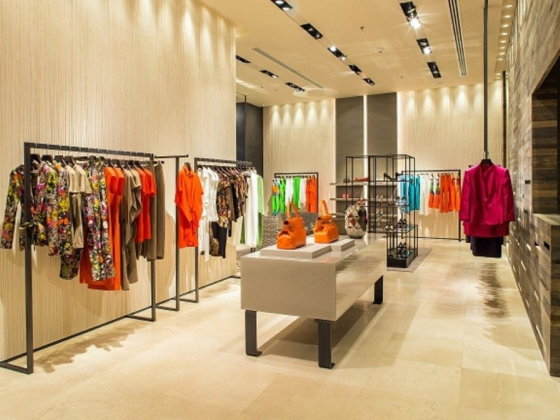
As Italy’s largest fashion house, Max Mara is a name known across the world, sy...


 Log in with Google