Article by:
DubaiDirectory

A New York City favourite, Shake Shack is a modern-day roadside style burger st...

If you typed "art dubai" into Google, you're probably after one of three things: the annual Art Dubai fair, a gallery to buy an original piece from, or someone to help furnish an office or hotel with art that doesn't look like it came from a stockroom. All three run through the same city infrastructure, and knowing where that infrastructure actually sits saves you a wasted afternoon driving to the wrong industrial unit in Al Quoz.
Alserkal Avenue, a converted warehouse district off Street 8 in Al Quoz, is the centre of gravity for contemporary art in Dubai. Around twenty commercial galleries operate there, most open Tuesday to Saturday, roughly 10am to 7pm, with quieter footfall in July and August when a lot of the collector base leaves for the summer. DIFC's Gate Village is the other serious cluster, more polished and closer to Business Bay and Downtown, and it tends to carry higher price points and more established international names. Jumeirah and Umm Suqeim have smaller, boutique galleries and framing-cum-art shops that suit buyers wanting something decorative rather than investment-grade. If a gallery lists an address in a free zone like Dubai Design District (d3), that's normal — d3 was built partly to host design and art businesses and several serious dealers operate from there under a design-trading licence rather than a standard DED mainland one.
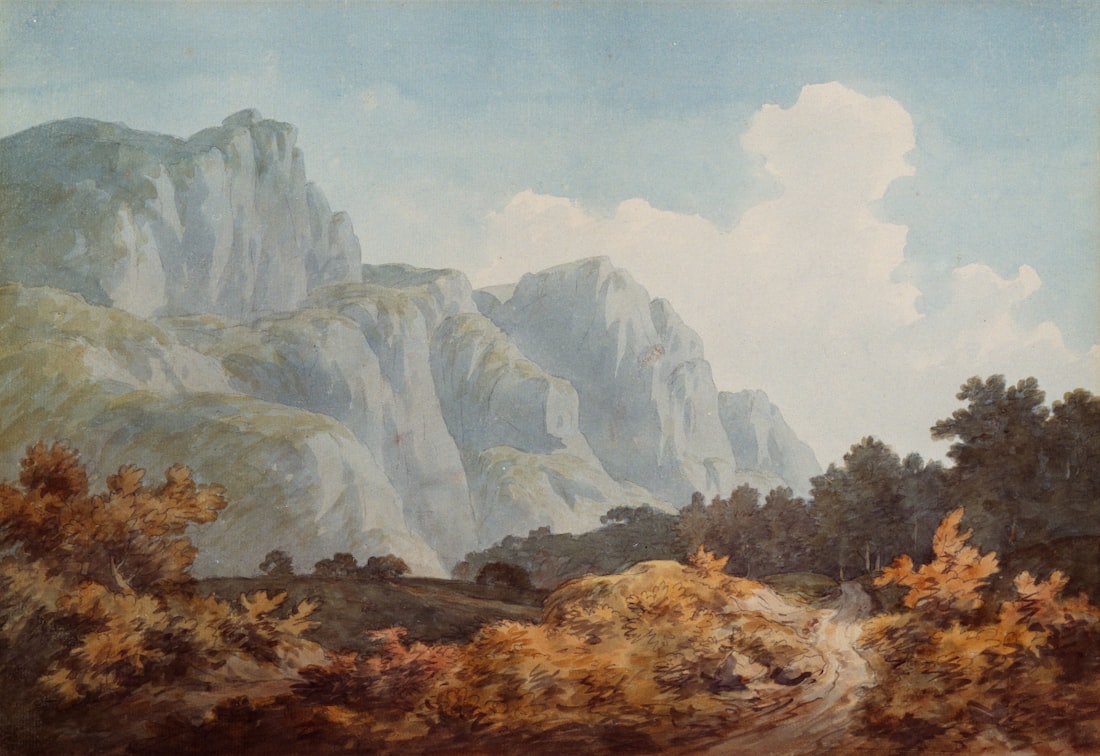
Art Dubai runs annually, usually in March, at Madinat Jumeirah, and it's the reason search volume for this term spikes every winter. General admission tickets run around AED 100–150; VIP preview access, which gets you in a day before public opening when galleries do most of their serious selling, costs more and is usually tied to a gallery invitation or a paid patron programme. Roughly ninety to over a hundred galleries from the Gulf, South Asia, Africa and Europe exhibit, and prices on the floor range from a few thousand dirhams for works on paper by emerging artists to six figures for blue-chip pieces. Don't expect haggling in the way you would in a souq — but do expect galleries to negotiate 5-10% off list price for a genuine buyer, particularly on the fair's final day.
Prices in Dubai's art market are wide because the market itself spans everything from tourist prints to serious collector pieces. As a rough guide:
Add 5% VAT on top of any purchase from a licensed gallery — if a seller quotes you a price and there's no mention of VAT either way, ask directly whether it's included, because some smaller operators quietly absorb it and others add it as a surprise at invoice stage.
A proper gallery or dealer, whatever the price point, gives you an invoice that names the artist, the title, medium, dimensions, year, and — for anything editioned — the edition number out of the total run. Ask for a certificate of authenticity signed by the artist or the gallery on letterhead; if the answer is vague or the certificate arrives without a signature, treat that as a warning sign rather than an oversight. Ask where the piece has been stored and whether it's travelled through customs recently, because import duty and humidity damage are real issues for anything shipped from outside the GCC. A dealer who can't tell you their DED trade licence activity, or who insists on cash with no invoice at all, is not someone you want holding your deposit on a five-figure canvas. Instagram sellers running pop-up shows in hotel lobbies are common in Dubai and some are entirely legitimate, but the same invoice-and-certificate test applies regardless of how the sale happened.
Corporate art buying is a real category here, driven by the sheer volume of new office fit-outs in Business Bay, DIFC and JLT and the churn in hospitality along Sheikh Zayed Road and the Marina. An art consultant will typically charge either a flat curation fee (AED 5,000–20,000 for a full-floor office, depending on piece count) or a percentage commission on top of the art's cost, usually 10-20%. Get this in writing before they start sourcing, along with who owns the relationship with the artist or gallery afterwards — some consultants mark up the underlying piece price substantially and don't disclose it, which is worth asking about directly rather than assuming. For a typical mid-sized office reception and boardroom, budget AED 15,000–60,000 all-in for four to six pieces including framing and installation.
If you're bringing art into the UAE from abroad, personal effects under a certain value generally clear without duty, but commercial-value shipments attract 5% customs duty on the declared value plus the 5% VAT — budget for both if you're importing anything bought at a fair overseas. Local framing shops in Karama and Al Barsha do competent standard framing at the lower end of the price range above; for anything valuable, use a framer who works with UV-filtering acrylic rather than glass, since acrylic is lighter, shatter-resistant, and better suited to the temperature swings between an air-conditioned interior and a balcony or sun-facing wall. Finally, if a piece is genuinely valuable, get it named on your home or business contents insurance specifically — a standard policy will often cap single-item claims at a level well below what a decent original painting is worth, and the gallery invoice is exactly the documentation the insurer will ask for.
A New York City favourite, Shake Shack is a modern-day roadside style burger st...
The kitchen promises a traditional taste of Greece, with a focus on fresh, loca...


 Log in with Google