Article by:
DubaiDirectory
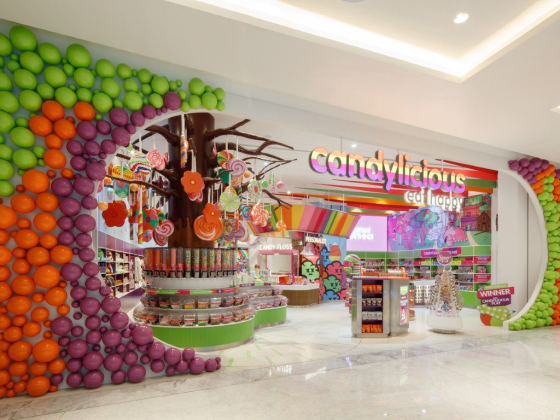
Candylicious combines candy and the world of imagination in a hip and fashion f...

Type "coffee shops near me" into Google Maps anywhere in Dubai and you'll get thirty pins within two minutes, half of them sponsored, most with a star rating between 4.2 and 4.7 that tells you almost nothing. The gap between a decent cup and a disappointing one has little to do with the rating and everything to do with three things: what the place is actually licensed to do, what the rent in that neighbourhood is doing to the menu prices, and whether you're searching at the right time of year.
The sponsored pins at the top of a "near me" search are paid placements, not quality signals. Scroll past them. What matters more is the number of reviews behind the star rating and how recent they are — a 4.6 built on 40 reviews from two years ago is far less reliable than a 4.3 with 800 reviews, half of them from the last three months. Recent reviews also tell you things the rating average hides: whether the AC has been struggling through summer, whether the wifi keeps dropping, whether the kitchen closes an hour before the listed time. In Dubai specifically, check for reviews mentioning Ramadan hours if you're searching during that period, since a huge number of independent cafés shift their opening times by two or three hours and Google's default hours are often stale.
Every food and beverage outlet operating legally in Dubai should display a Dubai Municipality food safety certificate near the till or entrance, usually a small laminated card with a rating. It's easy to miss because it's not designed to be a marketing tool the way the certificate is in some other markets, but it's the one piece of evidence that the place is actually inspected rather than just registered. A café trading under a DED cafeteria licence (the cheaper, faster licence category many small independents use) has lighter obligations than one trading as a full restaurant, which matters if you're the sort of person who cares about how food, not just coffee, is handled on the same premises. If you can't see a current certificate and the staff can't produce one when asked, that's a more useful red flag than any number of stars.
Coffee pricing in Dubai tracks commercial rent almost exactly, so the same flat white can cost you AED 16 or AED 32 depending purely on postcode. In Al Quoz's warehouse district, where specialty roasters cluster around Alserkal Avenue and rents are still relatively low for a creative-industrial zone, a well-made pour-over or flat white typically runs AED 18–24. In JLT and Al Barsha, where the customer base is mixed residential and office, expect AED 18–25 for the same drink. In DIFC and Business Bay, where footfall is corporate and rents are among the highest in the city, the identical cup climbs to AED 28–38, and oat or almond milk upcharges of AED 3–5 are standard rather than exceptions. A basic karak or instant coffee from a small Deira or Karama cafeteria, meanwhile, still sits at AED 2–5, which is worth remembering if you just want caffeine rather than an experience.
Delivery adds its own markup. Ordering through Talabat or Deliveroo typically costs 15–25% more than walking in and paying the counter price, because the platform commission gets folded into the delivery menu. If a nearby café's in-app price looks identical to its walk-in price, check the reviews — some outlets absorb the commission by quietly using smaller cup sizes for delivery orders.
"Near me" covers very different requirements depending on why you're searching, and Dubai's neighbourhoods sort reasonably well by purpose.
Two periods distort the normal "near me" search results and it's worth knowing which one you're in before you set off. During Ramadan, most cafés open later, close their dine-in seating during fasting hours or curtain it off, and see a sharp rush in the hour after iftar that can mean a 20–30 minute wait for a table in busy areas like Al Seef or Business Bay. Google's listed hours frequently lag behind the actual Ramadan schedule by a week or two at the start and end of the month, so a phone call beats trusting the app.
Through July and August, outdoor seating in most of the city is functionally closed by the heat, and demand shifts hard toward indoor, heavily air-conditioned spaces and delivery. This is also when smaller independent cafés are most likely to be short-staffed or running reduced hours, since summer is traditionally when Dubai's hospitality workforce takes leave. If a favourite spot's reviews suddenly dip in July, check the date before assuming the quality has slipped — it might just be a locum barista finding their feet.
If you're choosing between two similarly rated options nearby, ask the counter staff how long the espresso machine has been serviced and whether the milk is delivered daily or every few days. A well-run café, chain or independent, will answer both without hesitation. Hesitation, or an answer that dodges the question, tells you more about what's coming in your cup than any five-star review will.
Candylicious combines candy and the world of imagination in a hip and fashion f...
Full-time residential and commercial real estate brokerage, sales & leasing con...



 Log in with Google