Article by:
DubaiDirectory

Overlooking the pristine waters of the Arabian Gulf and set in 19 acres of land...

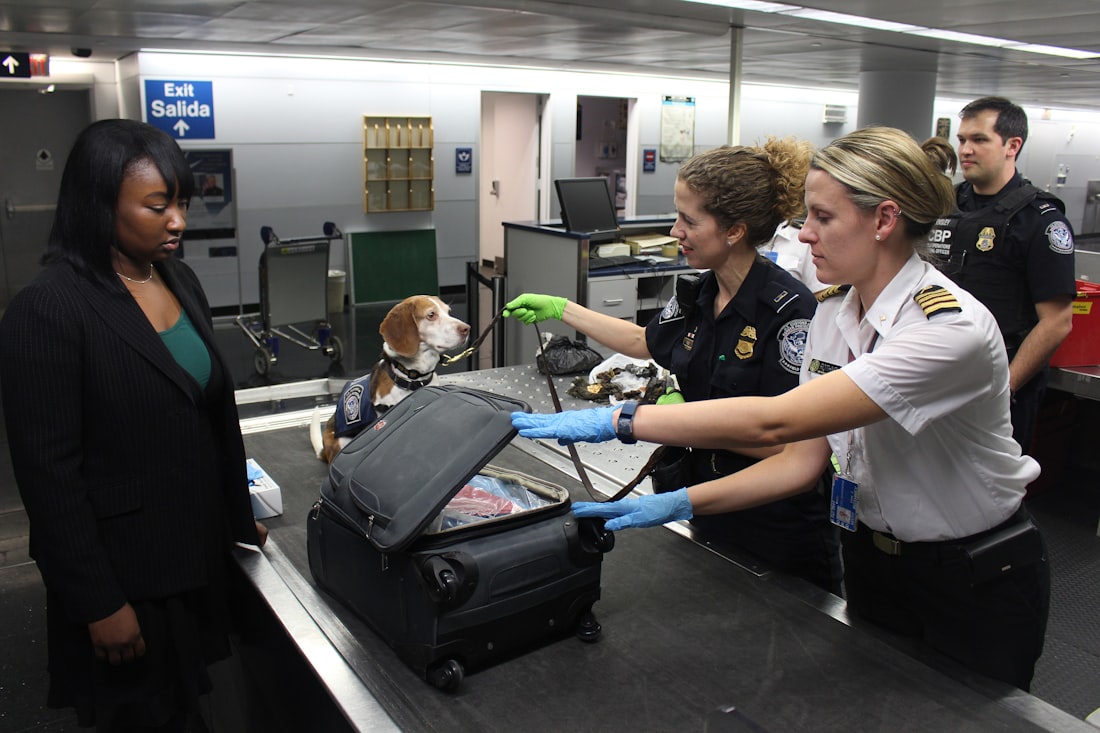
Most people assume customs clearance is one event. It is actually a sequence, and knowing the sequence is what lets you spot a delay before it becomes an expensive one. For sea freight arriving at Jebel Ali Port, the shipping line lodges a manifest with Dubai Customs before the vessel berths. Once it's alongside, your agent submits a customs declaration through the Dubai Trade portal, referencing your bill of lading, commercial invoice, packing list, and — depending on the goods — a certificate of origin. If the declaration matches the manifest and the goods fall into a low-risk category, clearance can be granted within hours. If Customs flags the shipment for physical inspection, which happens for a meaningful share of containers, add one to three working days.
Air freight through DXB or Al Maktoum moves faster because volumes are smaller and paperwork is usually pre-lodged by the airline's ground handler. A clean air shipment with correct documents can clear same-day. The bottleneck is almost never the airport — it's whether your invoice value, HS code, and consignee details line up with what's on the airway bill.
The UAE's standard customs duty is 5% of the CIF value (cost, insurance, freight) for goods entering the mainland. That's the figure most people quote and it's correct for the majority of general cargo. But several categories sit well outside it: alcohol attracts 50%, tobacco products 100%, and certain goods are duty-exempt entirely (basic foodstuffs, some pharmaceuticals, goods for re-export). On top of duty, 5% VAT is charged on the CIF value plus duty, collected at the point of clearance unless your business uses the VAT deferment scheme via the Federal Tax Authority, which lets VAT-registered importers account for it on their return instead of paying cash at the border.
So a shipment with a CIF value of AED 100,000 in the standard category isn't a AED 5,000 cost — it's AED 5,000 duty plus roughly AED 5,250 VAT (5% on AED 105,000), before you've paid the clearing agent, port handling, or container detention. Businesses that budget only for the headline 5% are consistently surprised by the real landed cost.
If your company is registered in a free zone — JAFZA, DAFZA, Dubai South, JLT's own free zone structure — goods can enter that zone without attracting duty at all, because free zones sit outside the UAE's customs territory for this purpose. Duty only becomes payable when the goods leave the free zone and enter the mainland market, at which point your agent files a mainland import declaration and duty is calculated then, not at the port. This is the whole logic behind using a free zone warehouse in Al Quoz-adjacent JAFZA or Dubai South: you can store, repackage, or re-export goods without ever triggering UAE duty, and only pay if and when you actually sell into the mainland.
A mainland-licensed business, by contrast, pays duty at the point the goods clear into the country, full stop. There's no deferral unless the goods are placed into a bonded warehouse first. This distinction catches out a lot of new importers who set up a free zone company assuming it simplifies mainland trading — it doesn't, it just moves where the paperwork happens.
Either way, before your first shipment arrives you need an import code from Dubai Customs, obtained through the Dubai Trade portal and linked to your DED or free zone trade licence. It costs a nominal registration fee and needs renewing periodically (typically under AED 250 a year). Without a valid, current import code tied to an active licence, nothing clears — this is the single most common reason first-time importers get stuck, especially if their trade licence has lapsed or doesn't cover the activity they're importing for.
Freight forwarders and clearing agents in Dubai — most operate out of Deira, Ras Al Khor, or near Jebel Ali itself — should give you an itemised quote, not a single lump figure. A fair quote separates: the clearing agent's service fee (typically AED 350–750 for a standard LCL sea shipment, AED 600–1,200 for a full container, AED 250–500 for straightforward air freight), port or terminal handling charges billed by DP World, any inspection or scanning fee if your consignment is selected for examination, and documentation charges for certificate of origin attestation where required. Duty and VAT should be shown as pass-through costs, not folded into the service fee — if an agent won't separate these, ask why.
Always ask for the agent's Dubai Customs broker registration number. Legitimate clearing agents operate as licensed companies registered with Dubai Customs; the industry runs almost entirely through companies rather than individuals, and a broker who can't produce a registration number or insists on cash-only, no-invoice arrangements is not one to trust with dutiable goods on your behalf, since liability for misdeclaration ultimately sits with the importer of record, not the agent.

Incorrect or missing paperwork causes more delay than anything about the goods themselves. The essentials are the commercial invoice showing true transaction value, a detailed packing list, the bill of lading or airway bill, and a certificate of origin — for goods from certain countries this needs attestation by a UAE embassy or chamber of commerce in the country of origin before it's accepted. Certain categories need additional sign-off before Customs will release them at all: food products need Dubai Municipality or ESMA approval, electronics and telecoms equipment need TDRA type-approval, cosmetics need Dubai Municipality registration, and medical devices need MOHAP clearance. None of these approvals happen at the port — they need arranging in advance, sometimes weeks in advance, and a shipment arriving without them will sit in a bonded area accruing storage charges while you scramble.
Undervaluing an invoice to reduce duty is the other classic mistake, and Customs cross-references declared values against market data. If a value looks wrong, the shipment gets held for valuation review, which can add a week and typically results in a reassessed (higher) duty plus a penalty, rather than the saving the importer hoped for.
Jebel Ali gives you a free period, usually five to seven days from vessel discharge, before container detention and demurrage charges start. After that, DP World and the shipping line both bill separately, and combined charges commonly run AED 150–400 per container per day. A container held up for a fortnight over a documentation dispute can rack up several thousand dirhams before it even clears — costs that fall on the importer, not the agent, regardless of who caused the delay. This is why experienced importers push hard to have documents complete and lodged before the vessel even arrives rather than after.
If Customs disputes your HS code classification or valuation, you can appeal through Dubai Customs' review process, but the practical fix is usually faster: correct the declaration, pay the reassessed amount, and move on, because contesting a classification formally can take longer than the demurrage clock allows. For businesses shipping the same product lines repeatedly, getting an advance ruling on HS classification from Dubai Customs removes this uncertainty for every future shipment.
Individuals relocating to Dubai with household effects don't go through a commercial clearing agent in the same way. Used personal items are generally cleared duty-free through a simplified personal effects declaration, provided you can show they're genuinely used and for personal use rather than resale — new, boxed electronics or furniture in commercial quantities will get treated as a commercial import regardless of who's shipping them. Alcohol brought in as personal effects is tightly restricted and effectively requires a liquor licence to import legally in any quantity; most residents underestimate how strictly this is enforced. For everyday courier parcels, the courier itself typically handles clearance and simply invoices you for duty and VAT before delivery, which is why an online order can arrive with an unexpected charge attached.
Overlooking the pristine waters of the Arabian Gulf and set in 19 acres of land...
Tribes is the realizationof one man's passion for all things African! From the ...



 Log in with Google