Article by:
DubaiDirectory

This sleek and stylishly blue lit, open air terrace sits 43 floors high, right ...

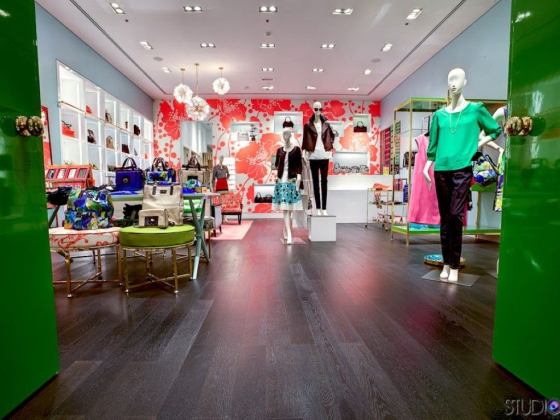
The word "fit-out" covers three very different jobs, and the first thing that determines your cost and your paperwork is which one you actually need. Shell and core is the empty concrete box the landlord hands over — no ceiling, no flooring, no partitions, just structure, risers, and a capped DEWA connection. Category A is what most Business Bay and DIFC landlords deliver on top of that: raised access flooring, suspended ceiling, basic mechanical and electrical distribution, and painted walls, ready for a tenant to drop desks into. Category B is the full build-out — partitions, meeting rooms, joinery, branding, IT cabling, kitchenettes — tailored to how the tenant actually works. Retail and F&B fit-out is its own animal again, driven by mall landlord design criteria and, for anything with a kitchen extract, Dubai Civil Defence sign-off before a single burner goes in.
Knowing which of these you're commissioning changes who you call, what you pay, and which approvals apply. A lot of wasted quotes happen because the tenant asked for "an office fit-out" without specifying the landlord had already delivered Cat A, so half the quote was pricing work that didn't need doing.
Every commercial fit-out contractor operating in Dubai needs a Dubai Municipality contractor classification — Grade A down to Grade C, or a specialist category for signage, joinery, or MEP. This isn't optional paperwork; it's what allows them to submit drawings and pull permits in your building. Ask for it upfront. A contractor who can't produce a current classification certificate either isn't licensed to do the work at all, or is planning to run your job under someone else's name, which becomes your problem the moment an inspector asks questions on site.
Mainland buildings go through Dubai Municipality (or Trakhees if you're in a Nakheel or Dubai Properties development like Palm Jumeirah or Discovery Gardens). Free zones run their own systems entirely. DIFC has its own fit-out guidelines and, in many towers, an approved contractor list you must choose from — turning up with a contractor who isn't on it means starting the tender again. JAFZA, DMCC (JLT's authority), and TECOM each require separate approval submissions with their own drawing standards and timelines, typically two to four weeks per review cycle, and rejections for incomplete fire and life safety details are common on first submission. Budget for at least one resubmission in your programme; contractors who tell you approvals will sail through first time are usually the ones who haven't dealt with that particular free zone before.
On top of the authority approval, you need: a landlord NOC (no work starts without it, and landlords in Business Bay and Downtown increasingly demand a security deposit against the fit-out, refundable on snagging), a Civil Defence NOC for anything involving fire alarm modification, kitchen extraction, or gas, and a DEWA load approval if your fit-out increases electrical demand — common in F&B and server-heavy offices. Ejari registration should already be in place before any of this starts, since several authorities won't process a fit-out permit without a valid tenancy contract behind it.

Office Cat A finishing, where the base is already shell and core, runs roughly AED 150–250 per square foot for a straightforward job — paint, ceiling grid, basic flooring, standard lighting. Cat B build-out on top of that, with partitioned offices, meeting rooms, and joinery, adds another AED 300–600 per square foot depending on finish level; a law firm wanting timber veneer and glazed partitions in DIFC sits at the top of that range, a back-office team in JLT sits nearer the bottom. Retail fit-out in a mall environment typically runs AED 400–900 per square foot once you account for mall design criteria, shopfront requirements, and signage approval — flagship units in Dubai Mall or Mall of the Emirates push higher again because landlord specification is stricter and inspection more frequent. Warehouse fit-out in Al Quoz or Ras Al Khor is priced very differently — mezzanine flooring, racking, and basic office pods inside a shed run AED 60–150 per square foot, reflecting lower finish expectations and cheaper site logistics than a city-centre tower.
Labour and material costs shift with the season. Site productivity drops in July and August under Dubai Municipality's midday outdoor work ban (typically 12:30pm–3pm, June to September), which mainly affects exterior signage and loading but still ripples into overall programme length. Demand for fit-out contractors peaks in the final quarter of the year as retailers race to open before the winter tourist season and companies relocate ahead of new-year lease starts; quotes secured in June and July tend to come in 10–15% keener simply because contractors have spare capacity.

A fit-out quote that's worth comparing against others should include:
If a quote arrives as a single number on a single page, that's not a quote you can defend later when a variation order shows up.

The most common failure is a contractor pricing to Grade C standards while quoting like Grade A — thinner partition studwork, non-fire-rated ceiling tiles in a corridor that requires them, undersized cabling containment. This usually surfaces during the Civil Defence inspection, at which point you're paying for rework on a live programme, not before it starts. The second most common failure is scope creep dressed up as unavoidable variation: ask for a written variation order with a reason and a price before agreeing to any change, and treat verbal instructions to the site foreman as unenforceable, because they are.
Fit-out contracts in Dubai are civil contracts, not covered by RERA (that's for real estate transactions, not construction works), so disputes go to Dubai Courts unless your contract specifies DIAC arbitration — worth checking before you sign, since arbitration is faster but not free. Your strongest practical protection isn't legal at all: it's the retention money. Hold back the agreed percentage until snagging is genuinely complete and the Civil Defence and authority completion certificates are in hand, not just promised. A contractor with nothing left to collect has far less incentive to fix what's wrong.
Finally, match the contractor to the building. A team that's excellent at warehouse mezzanines in Al Quoz may never have submitted a drawing package to DIFC's authority, and the learning curve on someone else's project timeline is not where you want it demonstrated. Ask specifically for two references in the same free zone or the same landlord portfolio as your unit — not just "similar projects" in general terms.
This sleek and stylishly blue lit, open air terrace sits 43 floors high, right ...
This American brand has captured the imagination of the customers with fabulous...
 Log in with Google