Article by:
DubaiDirectory

Welcome to Address Dubai Mall, a city shopping retreat that sparkles anew in th...

Most people searching for health food in Dubai are choosing between three different things without realising it: a meal prep subscription that lands on the doorstep, an organic grocery run, or a specialty store for gluten-free, keto or vegan staples. Each has a different price range and a different way of getting caught out. The one thing they share is that the operator has to hold a Dubai Municipality food trade licence for the kitchen or warehouse producing or storing the food — not just a DED trade licence for the company. That distinction is where most of the disappointment starts.
Meal prep is the fastest-growing segment and the one search volume like this usually points to. You're not paying for ingredients; you're paying for a commercial kitchen with HACCP procedures, a delivery fleet with insulated boxes or ice packs, and someone doing macro calculations that are at least roughly honest. Organic grocery delivery is closer to a supermarket model — you're paying a premium for sourcing and cold-chain handling, not preparation. Specialty stores sit in between: shelf-stable products (protein powders, gluten-free flours, monk fruit sweeteners) with a smaller but real markup for imported stock that's hard to find in Carrefour or Spinneys.
Al Quoz has become the default base for meal prep kitchens and bulk organic suppliers because the warehouse rents work and Dubai Municipality inspections are easier to pass in a proper industrial unit than a converted apartment. Boutique organic stores and health cafés cluster in Jumeirah, City Walk and around Mercato Mall, where the customer base pays for it. Karama and parts of Al Barsha do a brisk trade in dried goods, supplements and gluten-free basics at noticeably lower prices, mostly through smaller South Asian and Filipino-run grocers who import in bulk. Delivery-only meal prep brands tend to be headquartered in Business Bay, JLT or Al Quoz but serve Dubai Marina, Downtown and the northern communities as their core customer base, since that's where the gym-and-macros crowd actually lives.
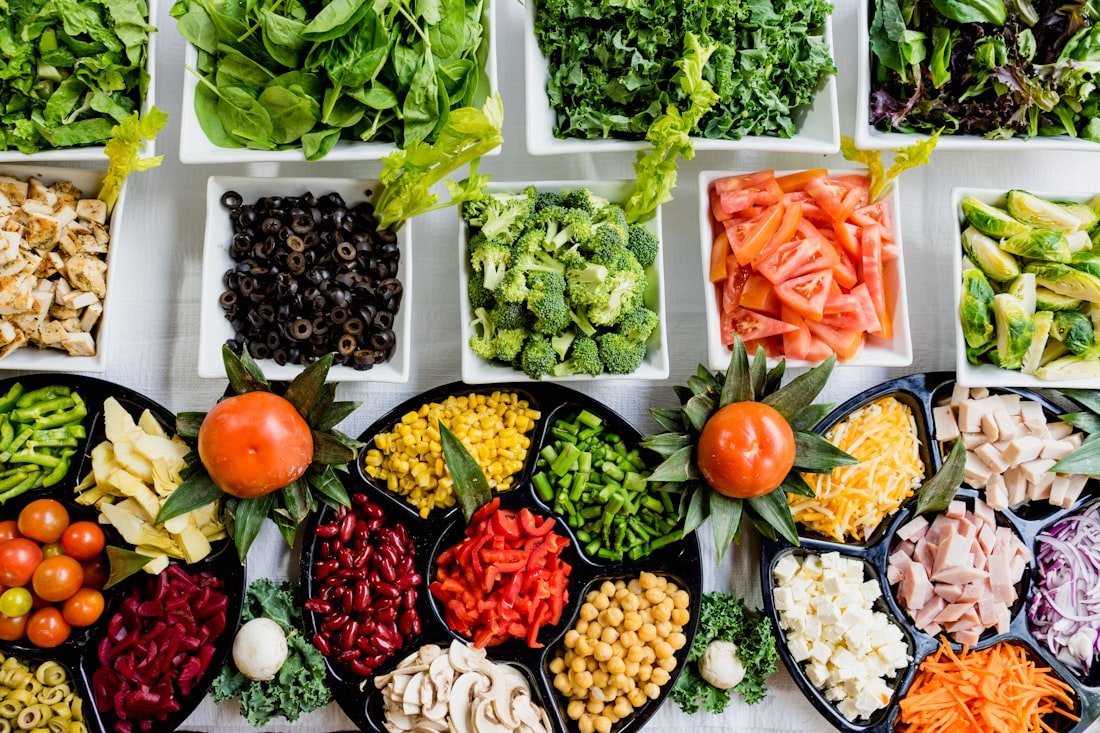
A basic five-day, three-meal-a-day prep plan without much customisation runs AED 500-750 a week. Once you ask for macro-specific portions, allergen exclusions or a named nutritionist behind the plan, expect AED 850-1,400 a week. Single prepared meals bought individually, rather than as a plan, land around AED 35-65 depending on protein source and portion size — anything under AED 30 for a meal claiming to be calorie-counted and fresh should make you ask where the margin is coming from. Organic grocery boxes, the kind delivered weekly with seasonal produce, generally sit at AED 150-320 depending on size and whether meat and dairy are included. A weekly detox juice cleanse, still popular in January, typically costs AED 400-900 for five to seven days, and the spread has almost nothing to do with quality and everything to do with brand positioning.
If a meal prep company quotes noticeably below these ranges, ask directly whether the kitchen is Dubai Municipality licensed or whether it's a home-based operation. Home cooking businesses without a commercial kitchen licence are not legal for resale in Dubai, though plenty still trade quietly through Instagram and WhatsApp groups. The food might be fine. The recourse if it isn't — food poisoning, an allergen mistake, a payment dispute — is basically nil, because there's no registered entity to complain to.

Ask for the Dubai Municipality food trade licence number and the name on it. A legitimate meal prep or grocery business will give you this without hesitation, because it's printed on their DED certificate and usually on their packaging too. Mainland companies need this alongside their DED licence; free zone companies (DMCC and JAFZA host a fair number of food businesses) can still deliver across Dubai, but the actual production or storage facility still needs Dubai Municipality approval regardless of where the company is registered. A company operating purely from a DMCC free zone office with no separately licensed kitchen is either using a licensed third-party kitchen — ask which one — or cutting a corner you should know about.
For anything marketed around a health condition — diabetic meal plans, renal diets, plans tied to a weight-loss programme run by a clinic — check whether the person designing the menu is a DHA-licensed dietitian, not just someone with a nutrition certificate from an online course. Clinics attached to hospitals in Al Barsha, Jumeirah and Umm Suqeim often run their own supervised meal programmes at a premium (AED 1,500-3,000 a week) precisely because of this oversight, and that premium is often justified if you have an actual medical reason for the diet rather than a general wellness goal.
A few direct questions in the first WhatsApp exchange will tell you most of what you need to know before you commit a week's spend:
An operator who answers all five without deflecting is almost certainly legitimate. One who gets vague about the kitchen address or can't name who's behind the macro calculations is worth skipping, regardless of how polished the Instagram feed looks.
Demand for health food in Dubai is lumpy, and prices move with it. January sees the sharpest spike — new year resolutions push meal prep bookings up 30-40% at most established providers, and it's the worst month to expect a discount or fast onboarding, since kitchens are running at capacity. Ramadan flips the pattern: demand shifts toward healthy suhoor and iftar boxes rather than standard three-meal plans, and pricing for these Ramadan-specific packages tends to run slightly higher (AED 600-950 a week) because portions and packaging change for the fasting schedule. Summer, when a good portion of the resident population travels, is the quietest stretch and the best time to negotiate a longer-term contract rate or get a free trial week, since providers are trying to protect recurring revenue rather than chase new sign-ups. If you're going to commit to a proper meal prep contract, June through August is when you have the most leverage on price.
Welcome to Address Dubai Mall, a city shopping retreat that sparkles anew in th...
Welcome to Address Fountain Views, a visually striking three-tower marvel combi...



 Log in with Google