Article by:
DubaiDirectory

A beloved NYC landmark, Magnolia Bakery specializes in hand-crafted classic Ame...

In Dubai, "holiday home" is a specific legal category, not a marketing phrase. It's issued by Dubai's Department of Economy and Tourism (DET), the same body that licenses hotels, and it sits entirely outside the standard Ejari residential tenancy system. A unit trading as a holiday home must carry a DET permit number, the operator must be a licensed company (DET does not issue these to individuals renting out a spare room informally), and the unit itself has to be registered against that license. If a listing has no permit number anywhere — not on the platform page, not on the contract, not on a WhatsApp reply when you ask — you're renting an unlicensed sublet. That matters more in Dubai than it might elsewhere, because unlicensed short lets frequently breach the building's own rules, and if the landlord's letting activity gets flagged, guests can be asked to vacate mid-stay with no real recourse.
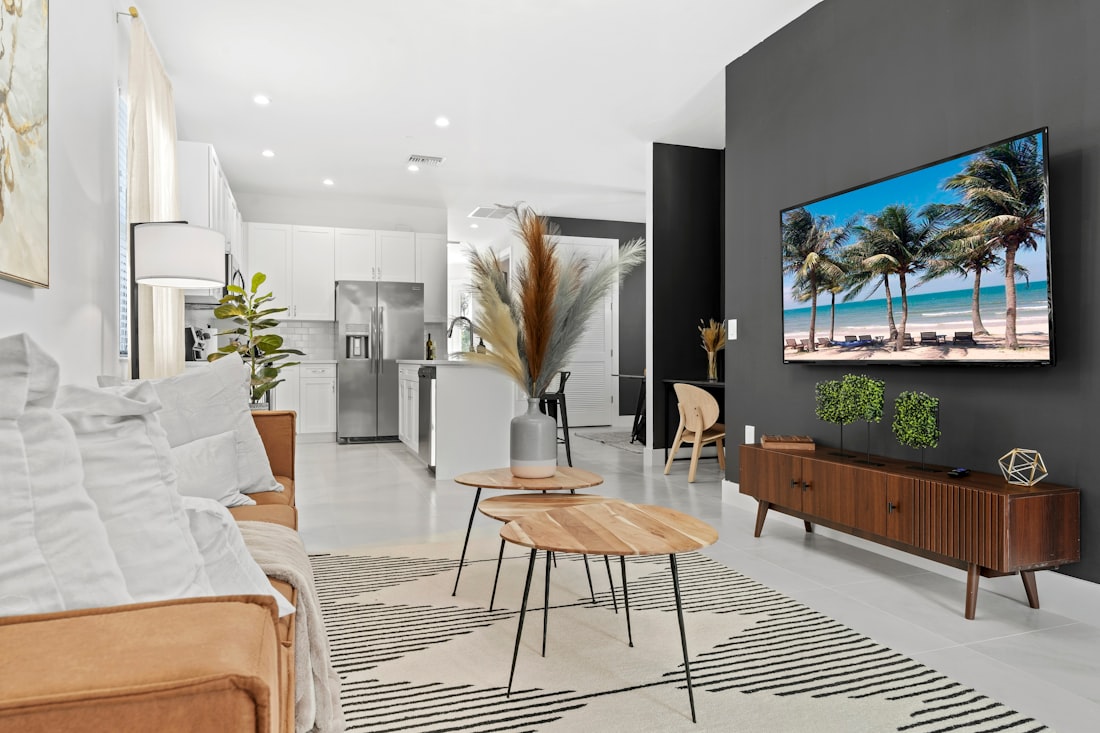
Rates swing hard with both location and season, more than most first-time visitors expect. A studio in Dubai Marina or JBR runs roughly AED 350-550 a night in the winter high season (November to March) and drops to AED 200-320 in July and August, when the heat kills casual tourism and operators discount heavily to keep occupancy up. A one-bedroom in Downtown Dubai, close to Burj Khalifa and Dubai Mall, sits higher again — AED 450-750 in season — because that location commands a premium regardless of the calendar. Business Bay and JLT run a touch cheaper than Marina for comparable stock, generally AED 280-450 in winter, since they're a short drive rather than a walk from the beach. Al Barsha and Deira holiday apartments are the value end of the market, often AED 180-320 year-round, popular with business travellers and longer-stay guests who don't need beachfront.
On top of the nightly rate, expect the Tourism Dirham fee, which is charged per room per night and banded by property grade — typically AED 7 to AED 20 for holiday home apartments depending on classification, added at checkout or built into the quoted total. A refundable security deposit of AED 500-2,000 is standard, held against damage and returned within a few days of checkout once the unit's been inspected. A cleaning fee, usually AED 100-250 depending on unit size, is charged once per stay rather than nightly — if you see it charged nightly, that's worth questioning. None of these are optional extras a legitimate operator hides; a proper quote itemises the nightly rate, tourism dirham, cleaning fee and deposit separately, so you can see exactly what you're paying for and what's refundable.
A licensed operator sends a written rental agreement before you pay anything, not just a payment link. That agreement names the DET-licensed company, states the permit number, sets out the deposit terms and cancellation policy, and specifies check-in and check-out times — usually 3pm and 11am, similar to a hotel. You'll be asked for a passport or Emirates ID copy in advance; this is a genuine DET requirement, not the operator being nosy, since holiday home guests have to be logged the same way hotel guests are. On arrival, access is typically via a smart lock code or a building concierge rather than meeting a stranger with a physical key — most professionally managed buildings in Marina, JBR and Business Bay have moved to keyless entry precisely because it removes the awkward handover. If a listing insists on meeting you in the car park to hand over keys with no paperwork exchanged first, treat that as a signal, not a convenience.
The most common failure is a building that simply doesn't permit holiday lets at all. Many towers in Dubai Marina, JLT and Business Bay have owners' associations or master developers that ban short-term letting in the building's constitution, regardless of what an individual owner or DET permit says at the unit level. When this happens, guests occasionally find themselves asked to leave by building security mid-stay, with the operator unable or unwilling to help because they were operating outside the rules to begin with. Before booking anything that looks like an individual owner rather than a management company, ask directly: what's the DET permit number, and is short-term letting confirmed as allowed by the building? A legitimate operator answers both without hesitation, because they've already cleared it.
The second common problem is overbooking during peak weeks — Dubai Shopping Festival in January, New Year's Eve, and the Eid periods — when demand spikes and marginal operators double-book units they don't fully control. Pay by card through a platform or the operator's registered business account rather than a personal bank transfer or cash, since that gives you a paper trail and, in the case of card payment, a chargeback route if the unit doesn't materialise. If you're quoted a price that's dramatically below the range above for the area and season, assume something's being cut — usually the license, sometimes the building's consent.
Owners considering the holiday home route need to go through DET's Holiday Homes permit process, not a standard DED trade license — this is tourism-regulated, separate from mainland commercial licensing. The permit is issued per unit and typically costs in the region of AED 1,500-2,500 annually depending on unit size and category, on top of which most owners use a licensed management company rather than running it themselves, since DET strongly favours operators who can demonstrate proper guest services, cleaning standards and 24-hour contact. Management companies typically take 15-25% of booking revenue in exchange for handling listings, guest communication, cleaning turnover and deposit disputes — cheaper than that commission usually means fewer services, not a bargain.
Before any of this, check two things that trip up almost every first-time owner. First, if you're leasing the unit rather than owning it outright, your own tenancy agreement almost certainly bars subletting without the landlord's written consent — letting it as a holiday home without that consent breaches your own lease, permit or no permit. Second, check the building's own bylaws or ask the owners' association directly, because DEWA registration and a DET permit don't override a building-level ban on short lets. Where the building does allow it, DEWA still needs to be informed of the change in occupancy pattern, and the unit needs to carry adequate contents insurance that specifically covers short-term guest occupancy — a standard residential policy usually excludes it, which becomes an expensive discovery the first time a guest causes damage and the insurer declines the claim.
Guests who've paid a licensed operator and been let down have a real complaint route through DET, since the operator's permit is on the line and DET does act on guest complaints against licensed businesses. Guests dealing with an unlicensed sublet have no such route — there's no permit to report, and the usual response from DET or the building is simply to shut the listing down, which doesn't get your money back. That asymmetry is the single best reason to check for the permit number before you pay, whichever side of the transaction you're on.
A beloved NYC landmark, Magnolia Bakery specializes in hand-crafted classic Ame...



 Log in with Google