Article by:
DubaiDirectory

Five Guys began as a family-run burger grill joint that expanded to just under ...

Most people search "plumber near me" at the worst possible moment: water is already on the floor. Before you call the first number that shows up, know this — in a Dubai high-rise, the leak might not even be your responsibility to fix or pay for. Get that wrong and you've paid AED 400 for a job the building's facilities team owed you for free.
A standard visit from a licensed plumbing company runs AED 100–180 as a callout or diagnostic fee, usually waived or absorbed into the final bill if you go ahead with the repair. A blocked kitchen or bathroom drain, cleared with a machine rather than chemicals, typically costs AED 150–350 depending on how deep the blockage sits and whether they need to access a shared riser. Mixer tap or cistern repairs sit around AED 150–300 including parts. Replacing a standard 50-litre electric water heater, common in older Deira, Karama and Al Barsha apartments, costs AED 800–1,500 fitted, more if the unit is a wall-mounted tankless type or if the old one has corroded its bracket into the wall.
Emergency callouts — genuine burst pipes, sewage backing up, no water at all — carry a premium. Expect AED 300–600 for an after-hours or Friday visit before any parts are counted, and more during Ramadan evenings or the first heavy rain of the year, when every plumber in Dubai gets the same three calls at once. Summer doesn't spike plumbing demand the way it spikes AC demand, but water heater failures do cluster in the shoulder months when tenants first switch systems on after winter.
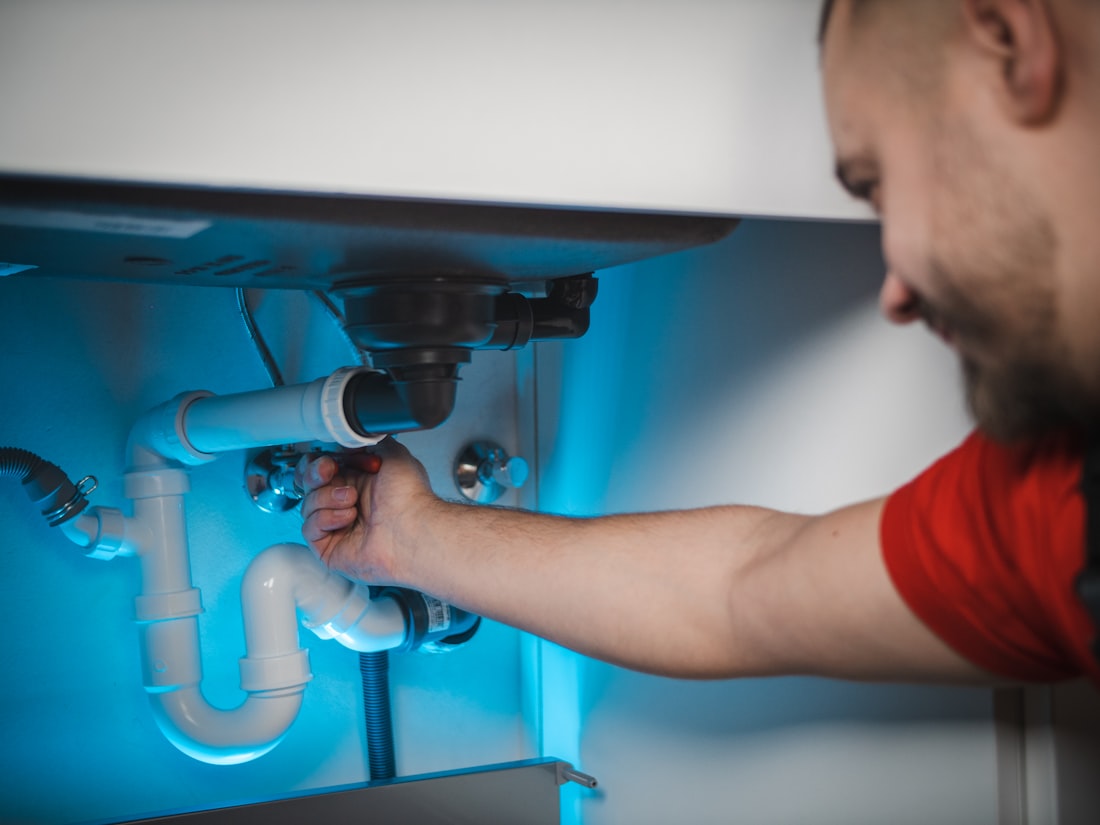
This is the detail most directories won't tell you. In the majority of Dubai towers — Business Bay, JLT, Dubai Marina, Al Barsha high-rises — plumbing that runs behind your wall or through the shared riser is the building's asset, maintained under the Owners' Association or the developer's facilities management contract, funded by your service charges. A leak from a shared stack, a blocked main drain serving several units, or low water pressure affecting the whole floor is not something you should be paying a private plumber to fix. Call building management or the OA's helpdesk first. If they confirm it's inside your own unit's private plumbing — your own tap, your own toilet cistern, your own water heater — then it's on you, and a private plumber is the right call.
Villa communities work differently. In Arabian Ranches, Al Barsha villas, Umm Suqeim and similar freehold or landlord-owned houses, the owner is responsible for the whole system, and a tenant should route the request through the landlord or the property management company rather than paying out of pocket, unless the tenancy contract says otherwise. Check your Ejari-registered contract; some do push minor maintenance costs, often anything under AED 500, onto the tenant.

Almost every trade in Dubai operates through a DED-licensed company rather than as an individual freelancer, and that's not a technicality — it's your only real protection if the work goes wrong. A company with a Dubai mainland trade licence can issue a proper VAT invoice, is traceable if a pipe bursts again in three weeks, and generally carries liability insurance. Someone found through a personal WhatsApp group, working solo out of a car, usually can't offer any of that, even if the work itself is competent.
A plumber who hesitates on the licence question, or offers a verbal-only quote with no invoice, is telling you something. It doesn't always mean bad workmanship — plenty of unlicensed individuals are perfectly capable — but it means no recourse if the same joint leaks again in a month, and no paper trail if you need to claim against a landlord or insurer.

Before any work starts on anything beyond a simple tap washer, ask for the quote in writing, even a WhatsApp message with a breakdown counts. It should separate labour from parts, name the specific part being replaced (brand and model for water heaters and mixers matters, since a generic swap can void a manufacturer warranty on newer fittings), and state whether wall-chasing or tiling reinstatement is included. For anything that involves cutting into a wall or floor — rerouting pipework, moving a water heater, fitting a new bathroom suite — a tenant in a rented flat should get written permission from the landlord first. Unauthorised structural changes are one of the most common disputes at Ejari renewal and deposit return time, and "the plumber said it was fine" carries no weight with a landlord or a rental dispute centre.
Under most standard Dubai tenancy contracts registered through Ejari, the landlord is responsible for pre-existing plumbing infrastructure — old pipework, corroded valves, a water heater that's simply reached the end of its life — while the tenant covers damage they've caused, like a blocked drain from grease or foreign objects. If a heater dies of old age in month four of a twelve-month lease, that's a landlord repair, not yours to fund. It's worth raising this before paying a plumber out of pocket and hoping for reimbursement later; landlords are far more responsive to a request made before the invoice than a claim made after it.
The AED 10 difference between plumbers rarely matters. The difference between a licensed company and an unregistered contact, and between calling the right party in the first place, is what actually determines whether this costs you AED 150 or several hundred dirhams you didn't need to spend.
Five Guys began as a family-run burger grill joint that expanded to just under ...
The sauce “Café de Paris” was developed by Mr. Boubier in 1930 to accompany the...

 Log in with Google