Article by:
DubaiDirectory

It was along the Dubai Creek that members of the Bani Yas tribe, one of UAE’s o...

"Sportswear near me" covers two completely different errands and Dubai answers them in different places. If you want a pair of trainers, leggings or a compression top off a shelf, you're heading to a mall or a multi-brand sports retailer — Dubai Mall, Mall of the Emirates, Ibn Battuta and Mirdif City Centre all carry the usual mix of flagship brand stores and larger multi-brand chains that stock everything from running shoes to swim gear under one roof. If instead you're trying to kit out a five-a-side team, a school PE class, or fifty colleagues for a corporate sports day, you're not shopping — you're sourcing a supplier, and that's a different job entirely, closer to hiring a printer than buying off a rack.
Most of the actual production for the second category happens away from the malls, in the screen-printing and embroidery workshops of Al Quoz, with wholesale fabric and blank garment suppliers concentrated around Deira's Al Ras and Naif districts. If you search "sportswear near me" from an office in Business Bay or JLT expecting a quick custom order, the workshop that actually makes it is probably twenty minutes away in an industrial unit you'd never walk past otherwise.
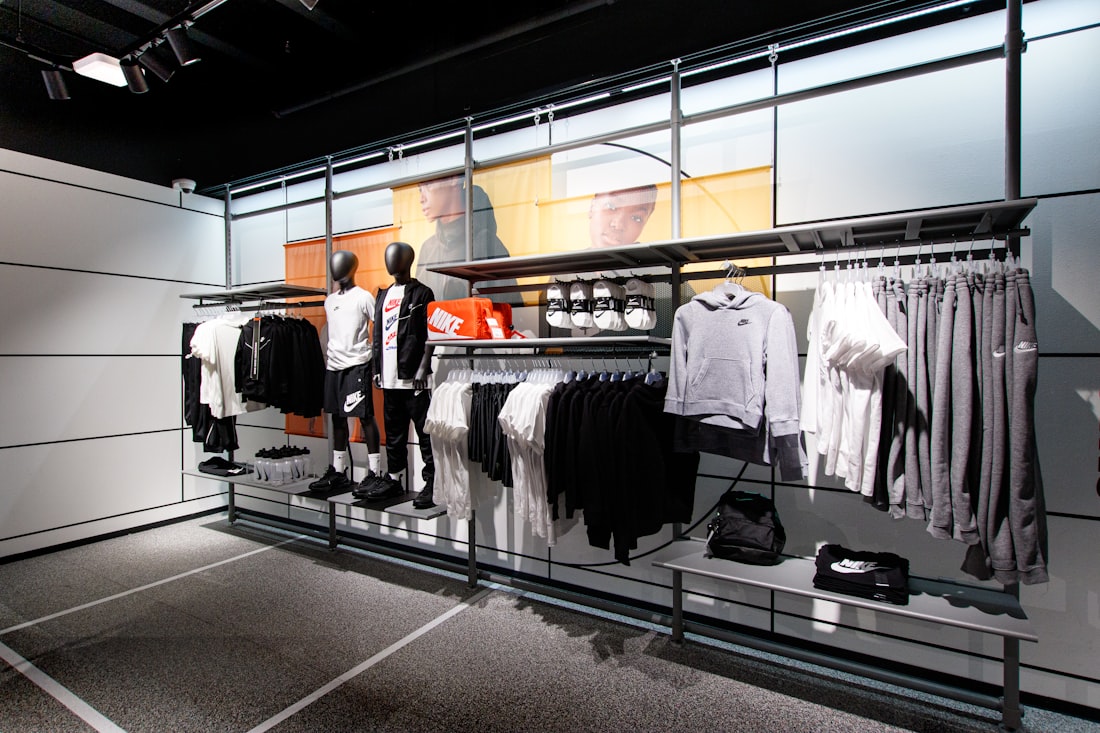
Off-the-shelf pricing in Dubai tracks pretty closely to what you'd expect elsewhere, adjusted slightly upward by rent and import duty. A decent pair of running shoes from a multi-brand store runs AED 250–600; genuine performance models with carbon plates or premium cushioning push into AED 700–1,200. Leggings and technical tops in multi-brand stores sit at AED 80–250 a piece, with flagship single-brand stores charging AED 150–400 for the same category of garment.
Custom and bulk orders work on a different scale, and this is where people get caught out because nobody quotes them the full picture upfront. A printed football kit — jersey and shorts, name and number — typically costs AED 90–160 per set for orders of fifteen or more, plus a one-off setup or screen fee of AED 150–300 that applies once regardless of quantity. Full sublimation printing, where the design is dyed into the fabric rather than printed on top, runs AED 140–220 per set and holds up far better under Dubai's laundering frequency and sun exposure. School PE kits ordered in bulk (100+ sets) land at AED 60–110 per set. Corporate sports-day polos or tees, screen printed for orders of fifty or more, cost AED 35–70 per piece. Anyone quoting well below these ranges for a full custom run is usually cutting corners on fabric weight or reusing a cheap blank garment that won't survive a season of five-a-side.
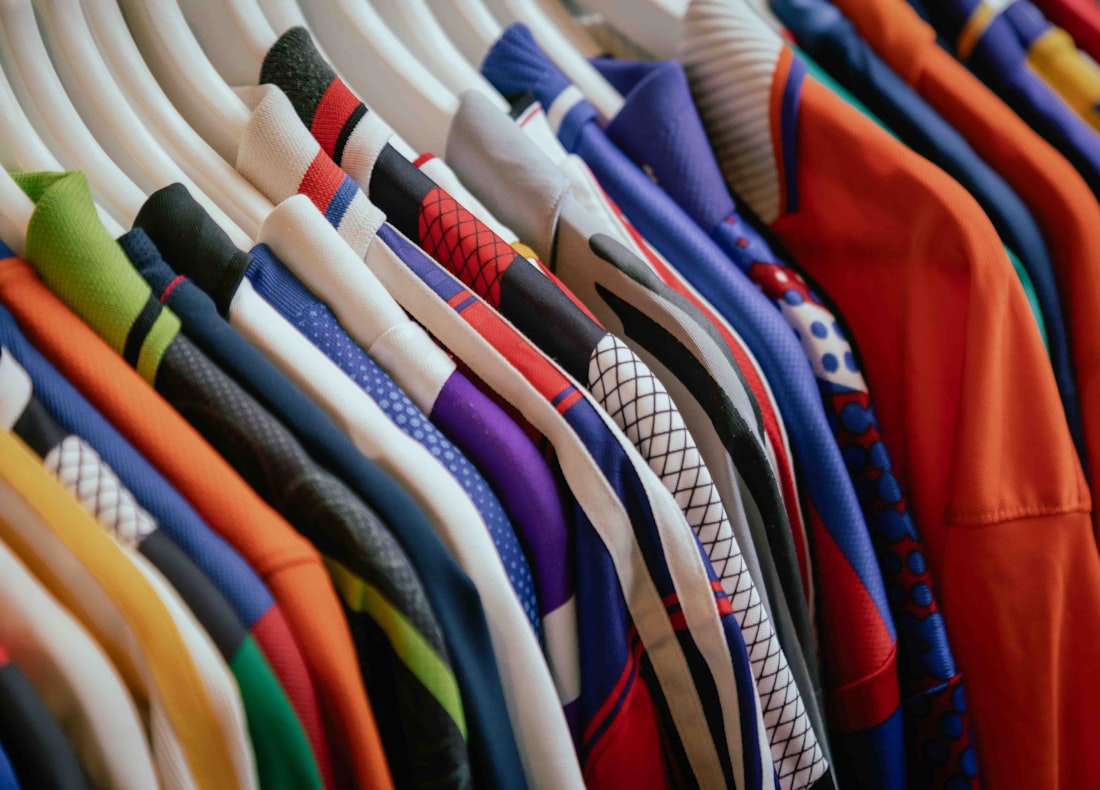
If you're the one organising the kit, get a written quote before committing, and make sure it actually states four things: the fabric GSM (grams per square metre — anything under 160 for polyester sportswear feels thin and see-through), the minimum order quantity, whether the setup fee is separate or bundled, and whether 5% VAT is included in the headline number. Suppliers who dodge the GSM question, or who won't produce a single sample garment before running the full batch, are the ones who deliver forty mismatched sizes two days before the tournament.
Lead time for a standard custom order is 10–15 working days from artwork approval, not from your first enquiry — approval delays are the most common reason a kit arrives late. Rush production is usually available at a 20–30% premium if you need it inside a week, which is worth knowing before the school sports day sneaks up on you.
One detail worth checking before you pay a deposit: whether the supplier holds a mainland DED trading licence rather than operating purely out of a free zone. A free-zone-registered company can manufacture and export, but selling and invoicing directly to a Dubai-based customer for retail goods sits in a grey area without a local distribution arrangement. It rarely causes a problem in practice, but a mainland licence means the invoice, the warranty, and any dispute over a botched print job are all straightforward to resolve without a second party in the middle.
Karama's market stalls and pockets of Naif in Deira carry a steady supply of branded-looking sportswear at prices that seem too good to be a mistake, because they are. Stitching that frays after two washes, logos slightly off in proportion, and sizing that runs small or large with no consistency between two items of the same labelled size are the usual tells. Buying a fake football shirt for a kickabout isn't going to land you in trouble, but you'll get a garment that pills and fades within a month, and there's no warranty or exchange to fall back on. The same caution applies to Instagram and Dubizzle sellers offering branded activewear at half retail — ask for the original receipt or authentication before paying, and treat a seller who can't produce one as a hard pass if the price gap looks implausible.
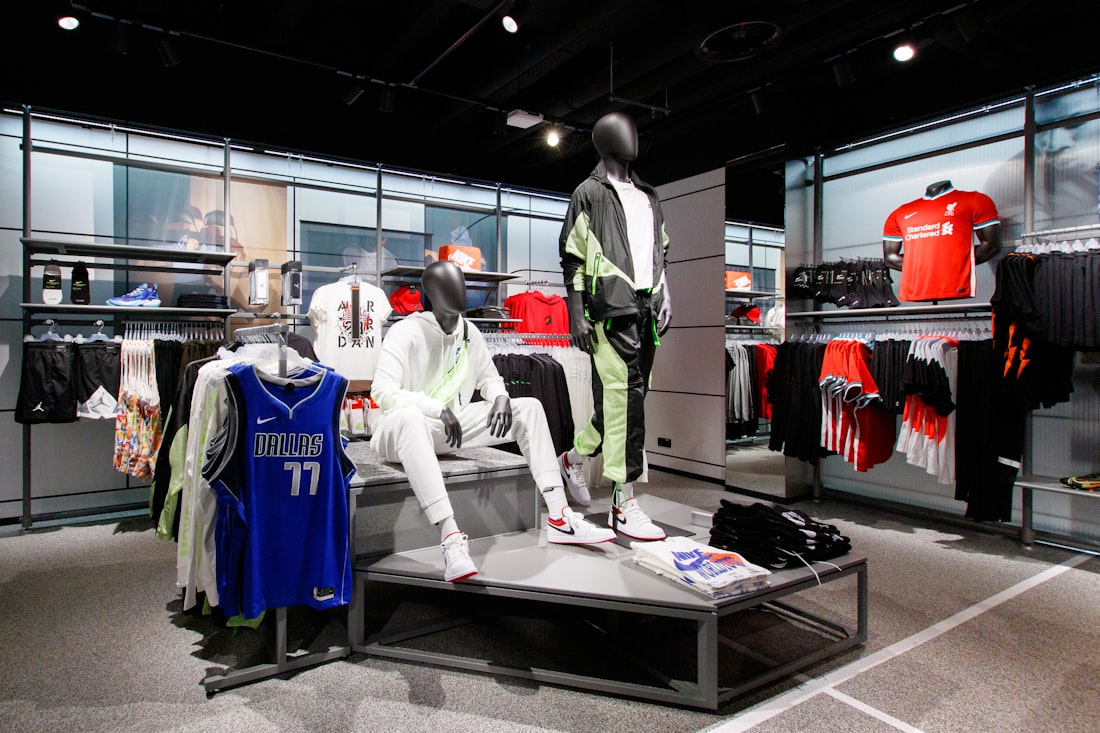
Demand and stock availability shift hard across the year here. From November through March, outdoor running along Dubai Marina, Kite Beach and JBR picks up sharply as temperatures drop, and this is also marathon season, so technical running shoes and lightweight jackets sell through fast and multi-brand stores restock aggressively. Custom kit suppliers get busiest in the same window because it overlaps with school sports days and corporate team-building events, so book four weeks ahead rather than two if you want your preferred delivery date.
Through the summer months, roughly May to September, outdoor gear demand drops off and buying shifts toward gym-specific and indoor-court sportswear as people retreat to air-conditioned facilities. Suppliers often run summer clearance on outdoor lines during this period, which is a decent window to pick up trail shoes or breathable running kit at a discount if you're prepared to wait it out.
UAE consumer protection rules require retailers to allow exchange or return within a reasonable window, but policies vary store to store — ask before you buy, not after, particularly for anything ordered online for delivery. For bulk custom orders, insist on a size chart sign-off from whoever's collecting measurements at your end before production starts; a mid-run correction on fifty printed jerseys costs far more than the ten minutes it takes to confirm sizes properly at the outset. And always get the final invoice itemised — garment cost, setup fee, and VAT shown separately — so if a dispute ever comes up over a reprint or a late delivery, you've got something concrete to point to rather than a WhatsApp thread of half-remembered numbers.
It was along the Dubai Creek that members of the Bani Yas tribe, one of UAE’s o...
Carluccio's restaurants are inspired by the cooking of Antonio Carluccio, with ...



 Log in with Google